The Dark Side of Fame: Mental Health Challenges among Celebrities and Social Media Influencers
The Dark Side of Fame: Mental Health Challenges among Celebrities and Social Media Influencers
Author: Sadaf Shaikh
Education: MPhill Istanbul Okan University, Researcher, Blogger, Writer
Abstract
Although often praised, the search for notoriety comes at a price to celebrities' mental health. Extensive examination and feeling exposed and continuously under strain might result from a loss of privacy. The expectation that people follow societal norms Self-doubt and a fear of failure are brought on by the desire to uphold the highest standards and present a perfect image. Fame may, paradoxically, because solitude. Which promotes loneliness and emotional aloofness as authentic ties become harder to come by. Adds to the shame associated with mental health due to concerns about public perception, celebrities are frequently reluctant to seek help, which adds another level of difficulty. The People are driven to overwork, which causes burnout and anxiety, by the dread of vanishing into anonymity. Negative public perception. May elicit sentiments of disgrace and culpability, influencing self-worth, and are influenced by media coverage. Finding a compromise between authenticity and an identity crisis and internal conflicts result from a constantly curated image. Both success and failure have advantages and disadvantages. Failure bears its emotional burden, with the strain of keeping accomplishment and the emotional wreckage of hindrances. Keywords: Celebrities; Suicide; Well-Being; Mental Health; Social Media
Introduction
In today's complex social media environment, we are increasingly immersed in a virtual world. In this case, it is not possible to obtain the data with a single line since it is not saved as a data frame in a specific format like CSV or Excel. As a global community, we are led by an increasing number of people in the public eye known as "celebrities." You might believe Stars are important because of their innate abilities, talents, genius, or accomplishments. In reality, though, the majority Celebrities sometimes lack talent and haven't accomplished much. Celebrities aren't important because of their status. Not because of who they are, but rather because of what they stand for. It is the meanings that become associated with celebrities as they come into view in the media that serve as their currency in the dissemination of popular culture (Ward, 2011). Our concentration and dedication to the delusion of celebrity culture may be all that it is. We produce an amazing image of fame that doesn't actually exist in reality. Life. For the camera, fame is a timeless, frequently tragic topic. We’re all familiar with a star, generally female, losing their icon status. Caving to the strain of others' opinions or expectations, plagued by delusion, ire (Horton, 2021). We have heard some memorable stories from the celebrity world throughout history, including the career path of American actress Marilyn Monroe, who died by suicide in 1962 at the age of thirty-six. Marilyn's tale My journey into the world of celebrities began with Monroe: "Why so many celebrities wind up with mental problems" "difficulties they encounter in their career paths?". Therefore, I decided to write my post on this contentious issue. In 2020, I interviewed a number of prominent figures in the film industry as a presenter for a film show on film and a previous reporter for the Fajr International Film festival. A large number of renowned Iranian film personalities were interviewed. The experience provided me with a better understanding. Opportunity to observe what it truly means to be famous and to learn more about the lives of celebrities. Within the public domain, to most people, stars are seen as the perfect role models since they have such a unique role in society. The main reason why most people share this viewpoint is that they have never had the chance to experience what it's like to be a celebrity. What they experience in their lives. The media portrays a huge and glamorous picture that continuously affects us, showing us A clever imitation of famous people designed to make us believe they live ideal, unusually happy lives. Therefore, it is to awaken to the notion that they are nothing more than "regular" folks, which is beyond our wildest dreams. This implies that just as every person has their own sorrows and pains. However, do they genuinely live a typical life? I can tell from my personal experience and the tales that mirror the lived experiences of those who swim in the waters of fame culture I have realized daily that celebrities actually experience more pain than we could ever imagine. The following is written in this article: examines the challenges and gloomy side of celebrity, and how it is more like a more of a pleasure than a tragedy.
Literature Review
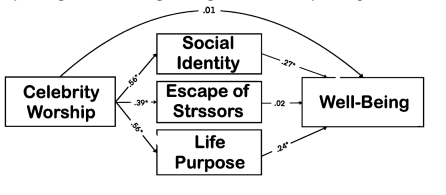
It seems that celebrity is everywhere; it has come to dominate the media debates across all spheres of existence, from politics and sports to the arts. And its surroundings. We don't merely learn about superstars; we may have even somehow developed perspectives about them. Them. We are actively prompted by celebrity culture to develop an opinion and pass judgment (Ward 2011). The public is mesmerized by celebrities. For a variety of reasons, they captivate the public's imagination, helping them maintain their appeal across cultures and civilizations. One major the aspirational lifestyle they frequently represent, which highlights opulent mansions, exciting activities, and high-profile folks, is another element. Vocational routes. People may experience a sense of fantasy in their own lives by living vicariously through celebrities thanks to this appeal. Moreover, celebrities are attractive because of their outstanding accomplishments and exceptional abilities in professions like performing. Other areas, including music and athletics. Their reputation as top experts is strengthened by their exceptional accomplishments and skills. People who have reached the top of their field and gained respect from supporters Movies, music, or other performances provide a form of escapism through celebrities. This makes it possible for they may temporarily leave the difficulties of daily existence and immerse themselves in the alluring realm of their imaginations by reading books. Most beloved superstars. Recognizability and reliability are also important components of a celebrity's allure. A few famous people connect with the accessible to the public because of shared experiences or relatable qualities, establishing an emotional bond and feeling of connection. Furthermore, Celebrities have a major impact on culture because they act as icons who shape and reflect societal values, trends, and even the course of history. Impacting social and political movements. The celebrities have become more available than ever thanks to the emergence of social media, which I'll discuss in more detail later in this piece. Bringing stars and their admirers closer together. Direct participation via sites such as Twitter and Instagram allows celebrities to share glimpses of their daily lives, thoughts, and behind-the-scenes moments, thereby improving their appearance. Reliability. Mystery and appeal enhance the attractiveness of celebrities. The -allegedly- restricted entry to their private creates a feeling of interest and intrigue among the public when paired with the occasional peek into their environment. Furthermore, comprehensive media coverage—which includes interviews, red carpet events, and magazine features—strengthens the notion that the film is a cultural phenomenon. Maintaining celebrities in the public eye. Even though the celebrity-fan connection seems crucial, celebrity worship is worship that takes place on a high level. Nature dictates that it is par asocial. However, occurrences like Diana's passing highlight the degree to which a certain celebrity's influence may be seen. Figures hold enduring symbolic importance The sensation of belonging that people have as members of a group is known as social identity. Shared hobbies and group experiences promote interpersonal connections inside fan communities. That increase self-esteem and lessen sentiments of loneliness. Fandom, especially for Thai youngsters, is a big deal. May provide a place for acceptance and self-expression that goes beyond accepted social norms. Expectations and norms. Escaping Stressors entails utilizing fandom as a psychological outlet to momentarily stay away from actual stresses. Engaging with music, fictional narratives, or online communities is an excellent method of emotional regulation and self-expression. Emotional comfort and relief can be provided by fan pursuits. Despite the fact that too much escapism might result in Moderate and purposeful participation can serve as an effective buffer against negative consequences, though there are other variables that contribute to them. Stress management and coping strategies. Life Purpose conveys the sense that one's life has meaning and purpose. Many enthusiasts believe that It encourages innovation and affects personal and professional growth more than only giving temporary delight. Nurtures engagement in community-based programs and helps define professional objectives. This is in line with that a strong feeling of purpose is a major factor in psychological health, according to studies. Although these advancements are encouraging, a significant portion of the current study continues to be based on Western cultural settings. We have a restricted understanding of how these psychological influences social identity, life meaning, and stress reduction all work together to affect mental health in non-Western nations like Thailand. Furthermore, few research have looked at these mediators together, within one unified framework. The objective of this research is to investigate the connections between social identity, fan involvement, and the pursuit of escape. And life purpose within the context of Thailand. By addressing these research gaps, the current study aims to provide fresh perspectives on the role fandom may play in both significant and meaningful ways. A culturally relevant factor that encourages psychological well-being in daily existence. Additionally, the spread ability of material on social media may transform obscure people into overnight sensations. From the moment I got up, I was thinking about it.Celebrities may grab the public's attention thanks to the dynamics of social media, from viral challenges to popular hashtags. Rapidly. This democratization of fame enables fortunate people, who might have been missed in established mediums, to reach millions of others in an instantaneous. Establish their own niche and gain financial success as well as notoriety. This arena is extremely competitive. In it, there isn't much space for moral issues, thus celebrities occasionally employ unethical strategies.to become well-known (see Shahghasemi, 2020 & 2020, for example) although the advantages are obvious, it's crucial to recognize this new celebrity status's downsides via social networking. The mental health can suffer greatly from the continual scrutiny and stress of maintaining a carefully selected online image. Celebrities manage the obstacle of a blurred boundary between their private and public life, which also brings up concerns about privacy. Of finding a balance between authenticity and the need for a regulated image. These platforms offer unmatched prospects for The toll that celebrity status and close contact with fans take on celebrities' mental health is a serious problem that must be addressed.(Lee, 2019).
Research Methodology
As a celebrity, you are always attempting to please everyone and so lose control of your own life. As written in an article for The Guardian: "The strain of projecting a persona for droves of strangers is a well-worn one. “Especially for female celebrities whose attractiveness, thinness, age, and desirability are continuously monitored. Scrutiny." the unrelenting desire for new content, the pressure to remain always visible, and the increasing expectations for Celebrities experience these characteristics in focus, but anyone who uses social media is familiar with them. Became well-known online at an astounding rate. “I can't have one moment where I'm like 'I don't want to do this,'” a singer named Bili Eilish laments a well-known American singer-songwriter. "If I don't keep smiling, they despise me and think I'm awful." (Horton, 2021). This makes it impossible for you to be yourself and enjoy the life you want. As a result, most celebrities often live more for others than for themselves. As constantly visible to the public, celebrities tend to be anxiously obsessive with negative comments about their appearance and actions, as if their mental health is at their fans’ hands. In other words, feeling good or bad is dependent upon their fans’ reactions and how they managed to play their role to astonish the viewers. As mentions Shahghasemi (2022) in his course for Celebrity Studies in the University of Tehran: On social media, when celebrities receive hundreds of positive feedbacks and one negative, they end up desperately mad at that one negative comment. This is how they lead their lives under constant stress and strains at an overwhelming amount. Within the film industry, well-known actors and directors face a different set of pressures, including being unable to reach out for help. Bollywood actors also face a ticking clock, with a relatively short window to achieve success, which makes it an intensely competitive industry. The wide reach of social media has added to the feeling of living under constant scrutiny, says Amit Behl, film and TV actor. “It’s like always being on high alert” (N Khan, 2020). More concerning is that medical studies have pointed out that addiction is a common cause of death among celebrities (ÁgnesZsila, Gábor Orosz, Lynn E. McCutcheon, ZsoltDemetrovics, 2020). As mentioned earlier, in the example of Marilyn Monroe, when mentally devastated by their celebrity status all through their lives, at the end of their career path, many celebrities are known to die of drug overdose or committing suicide. It is a sad fact of the world we live in that every day, people choose to end their lives. However, it may appear For example, famous people or those with a following have a higher rate of celebrity suicides than people who aren't. (Robb-Dover, 2020).Additionally, these sad deaths are not constrained by professional boundaries, encompassing designers, politicians, authors, and actors as well as boxers. Entrepreneurs, and artists. (Bureau, 2022) Being well-known brings with it a variety of irreparable expenses to one's personal life, regardless of the professional area. Over one's lifetime, mental health would get worse. As we go along this route, through all the highs and lows, they continue to live their lives devoid of meaning and empty. For this reason, it may not be in the end. Wonder about the reasons behind the decisions of famous people to end their lives. According to the Los Angeles Police Department, Marilyn Monroe's suicide story shows that she was a popular actress who had a lot of fans. Monroe’s physicians reported that she was "subject to severe" according to the Monroe County Department of Medical Examiner-Coroner. “abrupt and unpredictable mood swings" and "fears and recurrent depressions," and had overdosed several times in the past. Maybe deliberately the idea of a celebrity killing oneself is not a product of the twenty-first century. One of the most well-known authors of his generation, Hemingway took his own life. Likely as a result of his declining physical health, after a fight with melancholy. Robin Williams, a famous actor after a lengthy fight with depression and addiction, he died himself in 2014. Sylvia Plath is regarded as one of the most well-known authors. Her day's most esteemed poets. Similar to other artists and creative, Plath was incredibly passionate, and because of this, distressed by certain events in her existence. At the age of 30, she committed suicide as a result of this (Robb-Dover, 2020).What do celebrity suicides have in common? In general, some risk factors apply to everyone. Substance addiction and misuse, profound sadness, mental health disorders, and so on tend to be factors in suicides. Atlantic released a study of celebrities' average life spans, particularly pop musicians, in relation to the general populace. Population and discovered that musicians are more likely to die young, and that suicide is a major cause (Robb-Dover, 2020)."Why would they want to kill themselves when they had everything?" is the question that most people ask. However, did it Do their material possessions and celebrity status really matter, or do they simply have everything? (Cherian, 2018). It may be difficult for many individuals to comprehend how one could be satisfied without possessing anything, since they believe that material possessions are essential to happiness. A superstar's life may be wretched. One potential explanation for why celebrity’s complete suicide is that fame brings pressure and judgment from people all over the world. When you’re living a life where people pay to see you perform on stage, or in movies, it can be stressful. Actors, musicians, and other celebrities are on the road a lot, away from their family and friends, and this stress can build up (Robb-Dover, 2020). In this case, they are constantly obsessed with how they can live up to the public’s expectations rather than living and enjoying their own life in peace. There’s also evidence to suggest that many people who become famous have a unique brain chemistry that may put them at higher risk for depression and suicide. Swedish university Karolina Instituted found that conditions like bipolar disorder were more prevalent in populations of artists, writers, and performers than in the general population, suggesting a link between mental illness and creativity (Robb-Dover, 2020). Some celebrities are prone to depression and bipolar disorder due to incessant media and public scrutiny (Bureau, 2020). Isolation and the sense of having to sustain a certain image may cause celebrities to suffer from anxiety and depression at the pinnacle of their fame. Satisfy the public's unrealistic expectations. Instead of confronting or dealing with their emotional pain or stress, many of them bottle it up. Taking it. As a result of their avoidance strategy and lack of control, they resort to drastic measures to conceal, manage, or inhibit this emotional strain. According to the study, suicide is one of many "coping" mechanisms employed by such persons, these include eating problems, addictions, self-harm, alcohol abuse, and drug misuse (Cherian, 2018). Relationships, the third tier of Maslow's hierarchy, would be the most important component for a happy and healthy existence. According to the study, other types of friendship and marriage relationships might lessen the severity of physical discomfort. This Even emotional suffering, the kind that might result in suicide, could be handled via solid important partnerships.(Cherian, 2018). Another crucial dark component, according to this reality about relationships, may be observed in a star. Life, which is pain in connections. A lot of celebrities have trouble because they are always in the public view. Maintain a healthy relationship over time. Because they are separated from their parents and family, where they properly belong, they realize that their followers don't actually like them as much as their family does.
Research Objective
To examine the impact of social media pressure on celebrities' mental well-being, with cyberbullying, public scrutiny, and online harassment as contributing factors to psychological distress and suicidal behavior. H1: There is a significant relationship between social media pressure and the mental well-being of celebrities, which may contribute to suicidal behavior. H2: Public scrutiny and online criticism significantly increase psychological distress among celebrities. H3: Social media pressure indirectly contributes to suicidal behavior through its effect on celebrities' mental well-being. H4: Strong mental health support systems reduce the negative impact of social media pressure on celebrities. H5: Effective cyberbullying laws and platform regulations can reduce the harmful effects of online harassment on celebrities' mental health. These hypotheses seek to explore the possible mechanisms by which celebrity worship may impact psychological well-being, providing information on both its positive and negative consequences. Harmful effects.
Findings
The findings of this study indicate that social media plays a significant role in shaping the mental well-being of celebrities. Constant exposure to public scrutiny, criticism, and unrealistic expectations creates considerable psychological pressure. The study found that cyberbullying, online harassment, and negative comments on social media platforms can contribute to anxiety, depression, emotional distress, and feelings of isolation among celebrities. Furthermore, the widespread use of social media has increased the visibility of celebrities' personal lives, making them more vulnerable to public judgment and criticism. The findings also suggest that viral controversies and online attacks can intensify mental health challenges, potentially increasing the risk of self-harm and suicidal behavior. In addition, the study highlights that existing legal and regulatory measures are often insufficient to effectively address cyberbullying and online abuse. Therefore, stronger legal protections, improved platform accountability, and accessible mental health support systems are essential to safeguard the well-being of celebrities in the digital age.
Results
The results of this study reveal a significant relationship between social media pressure and the mental well-being of celebrities. The analysis indicates that continuous public scrutiny, cyberbullying, online harassment, and negative social media interactions adversely affect celebrities' mental health. These factors contribute to increased levels of stress, anxiety, depression, and emotional distress. The study further demonstrates that the widespread exposure of celebrities' personal lives on social media makes them more susceptible to criticism and public judgment. Additionally, viral controversies and online attacks were found to intensify psychological challenges, potentially increasing the risk of self-harm and suicidal behavior. The results also show that existing legal and regulatory frameworks are inadequate in addressing online abuse effectively. Consequently, the findings support the need for stronger cyberbullying laws, enhanced platform responsibility, and improved mental health support mechanisms to protect celebrities from the harmful effects of social media.
Discussion
Without a doubt, social media has altered the reputation and financial landscapes, elevating stars to unprecedented heights. Financial and reputational success. In our increasingly connected world, platforms like Instagram, TikTok and Twitter have emerged as potent tools enabling stars to communicate directly with their fan base, thereby influencing their reputation and spreading their messages. Their public image and fan base are expanding. The influence of social media on celebrity culture is primarily characterized by the fact that it stars' capacity to manage their own tales. Celebrities historically depended on conventional media sources to distribute their details about their initiatives and lives. Now, thanks to the accessibility of social media, they can communicate intimate experiences, interact with supporters in real-time, promote their work, and engage with fans in real-time. This direct connection fosters a feeling of legitimacy, shattering expectations. Down the barriers that appear to separate celebrities from their followers. This, however, extends to the point where celebrities intentionally jeopardize their personal lives (Shahghasemi, 2021), and losing one's privacy can have negative repercussions. A person's life and psyche (Aeini, Zohouri & Mousavand, 2023). The financial success of celebrities is also enhanced by the possibility of monetization on social media. It appears that the majority of folks do. Lack the ability to properly utilize social media (Sabbar & Matheson, 2019; Sabbar & Hyun, 2016), and celebs may gain from the user's constant activity on social media. Celebrities and other content creators may now utilize services such as YouTube to generate money through sponsorships and ad revenue. People who are famous on Instagram and are often well-known in their own circles, capitalize on their sizable following in order to obtain profitable brand collaborations. These routes open up new revenue streams. Strengthening the financial portfolios of public figures. Surprisingly, the quality of life for most people deteriorates after (Shahghasemi, 2022; Peterson, 2018) they grow affluent. Additionally, the virility of social media content may elevate previously unknown people to immediate celebrity. From here the dynamics of social media allow celebrities to grab the public's attention, ranging from trending hashtags to viral challenges. Quickly. This democratization of renown enables fortunate people who may have gone unnoticed in conventional ways to rise to prominence. Entertainment settings, in order to create a unique space for oneself and achieve both renown and financial gain. This arena is incredibly there isn't a lot of space for ethical issues because it's competitive, so celebrities occasionally use unethical methods.to become famous (see, for example, Shahghasemi, 2020 & 2020). One of the primary challenges stems from the relentless scrutiny celebrities face on social media. Every aspect of their lives, from personal relationships to daily activities, is subject to public scrutiny (McNamara, 2011). The constant judgment and commentary, often fueled by anonymity, can be emotionally taxing, leading to heightened stress levels and anxiety. This perpetual state of observation creates an environment where celebrities may feel compelled to conform to societal expectations, sacrificing their authenticity in the process. The pressure to project an idealized image exacerbates the challenges celebrities face. Social media platforms are flooded with meticulously crafted content, portraying a polished and flawless version of celebrities' lives (Brown & Tiggemann, 2016). Although aesthetically pleasing (Aris et al., 2023), this well-constructed façade may separate people from their own reality, creating a feeling of separation between their true selves and their public personas. Feelings of inadequacy and self-doubt might be exacerbated by the worry of not meeting these unattainable expectations (Nosrati et al., 2023).Furthermore, the impact of unfavorable incidents or criticism is amplified by the rapid and extensive diffusion of information on social media. Within minutes, a single mistake—real or imagined—can turn into a major public controversy. Celebrities have an enormous burden due to their fear of public backlash and reputational harm, which exacerbates the strain on their mental health. For celebrities, the lines between their personal and professional lives are further blurred by their constant use of social media. There is little space for quiet or seclusion due to the ongoing desire for contact and material. According to Ollier-Malaterre, Rothbard, and Berg (2013), this lack of break might cause burnout and tiredness, which can have an impact on their general quality of life as well as their mental health. Some celebrities have spoken out about how social media affects their mental health in reaction to these difficulties. Public conversations about mental health are progressively de-stigmatizing these problems and promoting a more sympathetic and perceptive attitude toward the challenges faced by prominent people.
Recommendations
Based on the findings of this study, social media platforms should strengthen their policies against cyberbullying, online harassment, and abusive content targeting celebrities and public figures. Mental health support services should be made more accessible to celebrities, influencers, and content creators who experience psychological distress due to online pressure and public scrutiny. Social media companies should introduce effective reporting mechanisms and ensure the timely removal of harmful content. Furthermore, awareness campaigns should be conducted to promote responsible online behavior and encourage users to engage respectfully with public figures. Governments and regulatory authorities should also develop stronger legal frameworks to address cyberbullying and protect individuals from online abuse. These measures can help create a safer digital environment and reduce the negative impact of social media on celebrities' mental well-being.
Conclusion
This study concludes that fame, public recognition, and social approval do not necessarily guarantee happiness or psychological well-being. Drawing upon Lacan's theory of desire, it can be argued that individuals continuously pursue goals in an attempt to overcome a sense of lack and achieve fulfillment. However, the attainment of wealth, popularity, and celebrity status often fails to provide lasting satisfaction. For many celebrities, the gap between expectations and reality may result in feelings of emptiness, loneliness, and emotional distress. When combined with social media pressure, public scrutiny, and cyberbullying, these challenges can significantly affect mental health and, in some cases, contribute to suicidal thoughts and behaviors. Therefore, greater attention must be given to mental health support, responsible media practices, and effective legal protections to safeguard the well-being of celebrities in the digital age.
References
- Aeini, B., Zohouri, M., & Mousavand, M. (2023). Iranians and privacy preservation on social media: A systematic review. Positif Journal, 23(10), 88–100.
- Aris, S., Sarfi, T., Akhavan, M., & Zohouri, M. (2023). Motivations for consuming avatar-specific virtual items on the Zepeto gaming platform. Khazar Journal of Humanities and Social Sciences. (Forthcoming).
- Brown, Z., & Tiggemann, M. (2016). Attractive celebrity and peer images on Instagram: Effect on women's mood and body image. Body Image, 19, 37–43.
- Bureau, H. (2022). Why suicide is more common among celebrities, CEOs and creatives? Healthwire. https://www.healthwire.co/why-suicide-is-more-common-among-celebrities-ceos-and-creatives/
- Cherian, D. (2018). Understanding celebrity suicides: Tackling depression and loneliness. Gulf News. https://gulfnews.com/world/understanding-celebrity-suicides-tackling-depression-and-loneliness-1.2239540
- Horton, A. (2021). Celebrity documentaries showed the dark side of fame in 2021. The Guardian. https://www.theguardian.com/culture/2021/dec/17/trouble-at-the-top-celebrity-documentaries-showed-the-dark-side-of-fame-in-2021
- Khan, T. N. (2020). Young actor’s death reveals Bollywood’s mental health crisis. Al Jazeera. https://www.aljazeera.com/features/2020/6/23/young-actors-death-reveals-bollywoods-mental-health-crisis
- Kirshner, L. A. (2005). Rethinking desire: The objet petit a in Lacanian theory. Journal of the American Academy of Psychoanalysis and Dynamic Psychiatry, 33(1), 83–102.
- Lee, S. Y. (2019). Media coverage of celebrity suicide caused by depression and increase in the number of people who seek depression treatment. Psychiatry Research, 271, 598–603.
- McCutcheon, L. E., Orosz, G., Demetrovics, Z., & Zsila, Á. (2020). A lethal imitation game? Exploring links among psychoactive substance use, self-harming behaviors and celebrity worship. Addictive Behaviors Reports, 12, 1–6.
- McNamara, K. (2011). The paparazzi industry and new media: The evolving production and consumption of celebrity news and gossip websites. International Journal of Cultural Studies, 14(5), 515–530.
- Nosrati, S., Sabzali, M., Arsalani, A., Darvishi, M., & Aris, S. (2023). Partner choices in the age of social media: Are there significant relationships between following influencers on Instagram and partner choice criteria? Revista de Gestão e Secretariado, 14(10), 19191–19210. https://doi.org/10.7769/gesec.v14i10.3022
- Ollier-Malaterre, A., Rothbard, N. P., & Berg, J. M. (2013). When worlds collide in cyberspace: How boundary work in online social networks impacts professional relationships. Academy of Management Review, 38(4), 645–669.
- Peterson, J. B. (2018). 12 rules for life: An antidote to chaos. Random House Canada.
- Robb-Dover, K. (2020). The disturbing link between celebrities and suicide. FHE Health. https://fherehab.com/learning/link-celebrities-suicide
- Sabbar, S., & Hyun, D. (2016). What makes it likeable? A study on the reactions to messages in a digital social network: The case of Facebook in Farsi. SpringerPlus, 5, Article 1995. https://doi.org/10.1186/s40064-016-3771-3
- Sabbar, S., & Matheson, D. (2019). Mass media vs. the mass of media: A study on the human nodes in a social network and their chosen messages. Journal of Cyberspace Studies, 3(1), 23–42. https://doi.org/10.22059/jcss.2019.271467.1031
- Shahghasemi, E. (2020). Iranian celebrities on the internet. Journal of Cyberspace Studies, 4(1), 77–80. https://doi.org/10.22059/jcss.2020.74782
- Shahghasemi, E. (2020, September). Pornography of networked feminism: The case of Iranian “feminist” Instagramers. In Proceedings of the 2nd International Conference on Future of Social Sciences and Humanities (Prague, Czech Republic). https://doi.org/10.33422/2nd.fshconf.2020.09.170
- Shahghasemi, E. (2020, September). Pornography of poverty: Celebrities’ sexual appeal at service to the poor? In Proceedings of the 2nd International Conference on Future of Social Sciences and Humanities (Prague, Czech Republic). https://doi.org/10.33422/2nd.fshconf.2020.09.172
- Shahghasemi, E. (2021). Rich kids of Tehran: The consumption of consumption on the internet in Iran. Society. Advance online publication. https://doi.org/10.1007/s12115-021-00626-3
- Shahghasemi, E. (2022). Human sustainable development: Welfare and happiness in Iran. In Proceedings of the First International Scientific Research Conference on Sustainable Engineering and Technology (Istanbul, Turkey).
- Sternheimer, K. (2011). Enduring dilemmas of female celebrity. Celebrity Studies, 2(1), 44–49.
- Ward, P. (2011). Gods behaving badly. Baylor University Press.
- Yau, E. (2018). Why suicide is more common among celebrities, CEOs and creatives, and how therapy helps. South China Morning Post. https://www.scmp.com/lifestyle/health-wellness/article/2151761/why-suicide-more-common-among-celebrities-ceos-and-creatives
- American Psychiatric Association. (2022). Diagnostic and statistical manual of mental disorders (5th ed., text rev.). American Psychiatric Publishing.
- Bandura, A. (1977). Social learning theory. Prentice Hall.
- Durkheim, E. (1897/2005). Suicide: A study in sociology. Routledge.
- Freud, S. (1920). Beyond the pleasure principle. Hogarth Press.
- Joinson, A. N. (2008). Looking at, looking up or keeping up with people? Motives and use of Facebook. Proceedings of the SIGCHI Conference on Human Factors in Computing Systems, 1027–1036.
- Marwick, A. E., & Boyd, D. (2011). To see and be seen: Celebrity practice on Twitter. Convergence, 17(2), 139–158.
- Nesi, J., Choukas-Bradley, S., & Prinstein, M. J. (2018). Transformation of adolescent peer relations in the social media context. Journal of Research on Adolescence, 28(2), 267–290.
- Pirkis, J., & Blood, R. W. (2001). Suicide and the media: A critical review. Crisis, 22(4), 190–198.
- Schaller, M. (1997). The psychological consequences of fame: Three tests of the self-consciousness hypothesis. Journal of Personality, 65(2), 291–309.
- Stack, S. (2005). Suicide in the media: A quantitative review of studies based on non-fictional stories. Suicide and Life-Threatening Behavior, 35(2), 121–133.
- Stever, G. S. (2011). Celebrity worship: Critiquing a construct. Journal of Applied Social Psychology, 41(6), 1356–1370.
- Twenge, J. M., & Campbell, W. K. (2018). Associations between screen time and lower psychological well-being among children and adolescents. Preventive Medicine Reports, 12, 271–283.
- World Health Organization. (2021). Suicide worldwide in 2019: Global health estimates. World Health Organization.