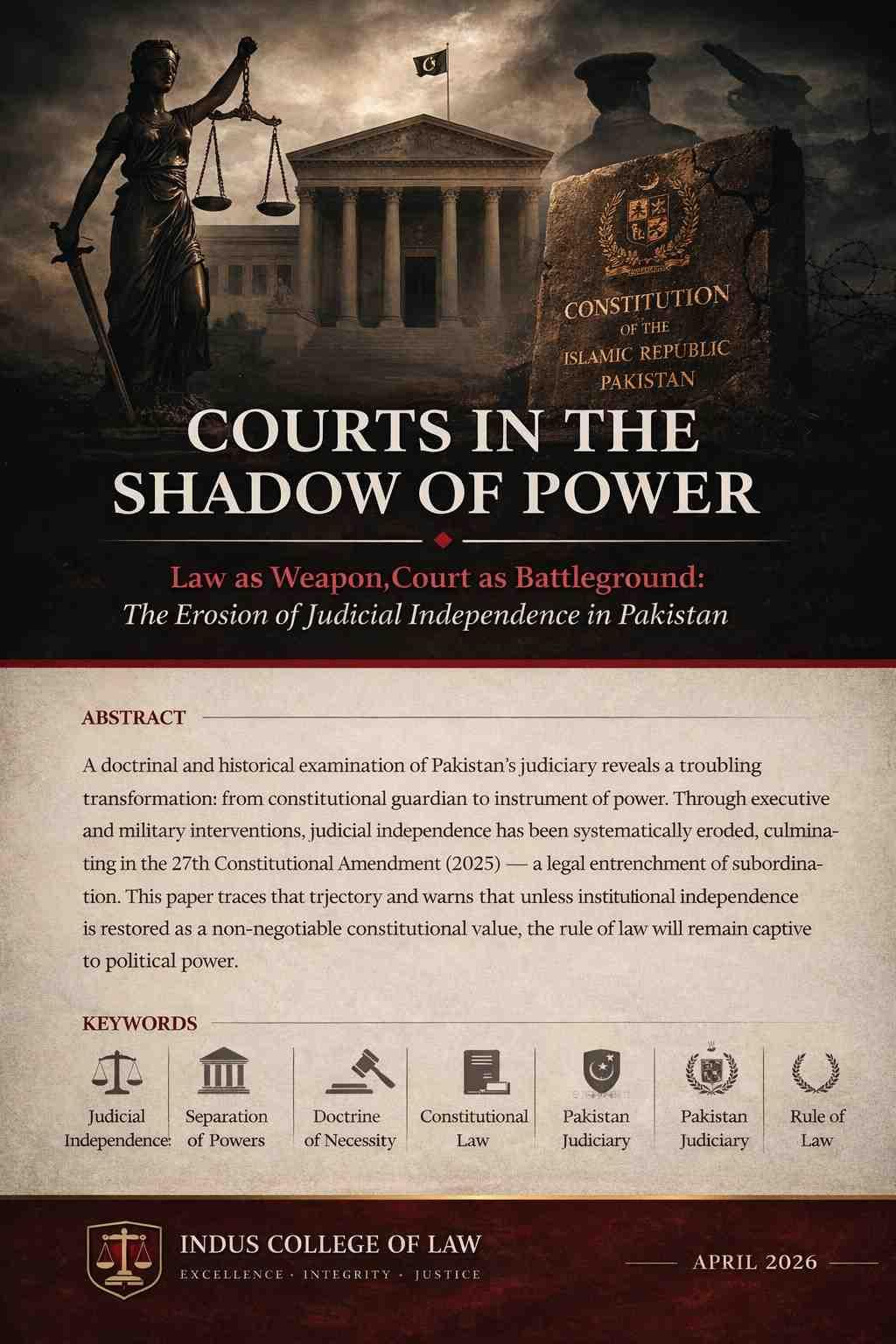
Judicial Independence: Safeguarding Democracy

Judicial independence is the cornerstone of constitutional democracy. Without an independent judiciary, fundamental rights become mere words on paper, and the rule of law gives way to the rule of power.
Constitutional Framework
The Constitution of Pakistan establishes a robust framework for judicial independence through several key provisions:
Separation of Powers
Article 175 establishes the Supreme Court, High Courts, and subordinate judiciary as distinct from the executive and legislative branches.
Security of Tenure
Judges of the superior courts enjoy security of tenure under Articles 179 and 195.
"The independence of the judiciary is not a privilege of judges but a right of the people to have their disputes resolved by impartial arbiters."
Contemporary Challenges
- Executive pressure through transfers and delayed appointments
- Resource constraints affecting institutional capacity
- Questions about the appointment process transparency
Conclusion
Judicial independence is not an end in itself but a means to ensure justice and protect democracy.